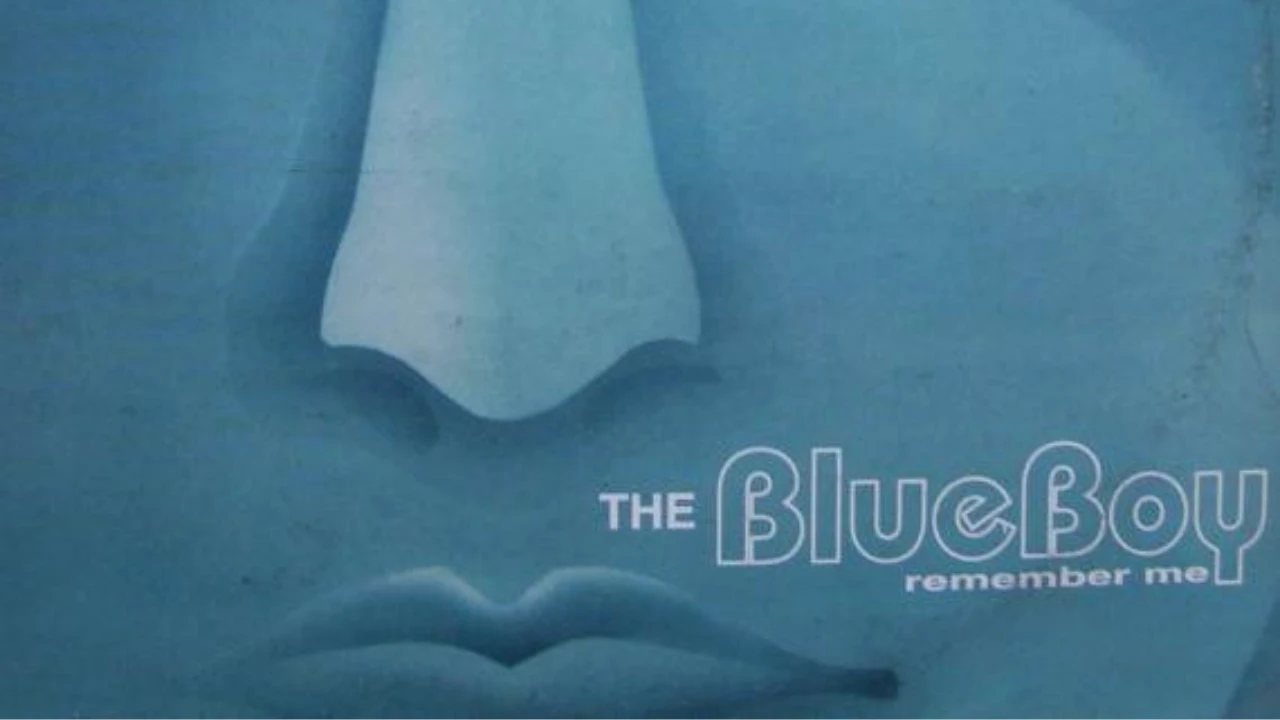
Thirty years of Blue Boy’s Remember Me
Some songs announce themselves. Others slip into a record collection sideways. They land on the back half of an EP nobody was watching and take their time becoming unforgettable. “Remember Me” by Blue Boy is the second kind. It turned thirty last month. Even so, it has aged better than almost anything else that came out of house music in 1996.
A Quiet Start On A Forgotten EP
Guidance Recordings released Scattered Emotions in July 1996. Few people outside a handful of Chicago house heads noticed. After all, a Scottish DJ made this four-track EP, and nobody had reason to expect much from it. It sat between tracks with names like “Clickwork ’91” and “So Lonely.” Track two carried the name “Remember Me.”
Thirty years later, however, that two-minute sketch stands as one of the most recognisable dance records the nineties produced.
The Man Behind The Alias
Blue Boy was the recording alias of Alexis “Lex” Blackmore. Before that, he had knocked around under a few different names, until Guidance picked up four of his tracks. Spencer Kincy ran that label out of the Cajual stable. One track landed on the b-side almost as an afterthought.
To build it, Blackmore lifted a vocal snippet from “Woman of the Ghetto,” a song Marlena Shaw wrote in 1969. That vocal came from Shaw’s live performance at the Montreux Jazz Festival in July 1973.
A Sample With Weight Behind It
Blackmore never meant the line as a hook. In Shaw’s original it carries real anger dressed up as sorrow. She sings for the Black domestic workers who raised white families’ children, only for those same families to forget them once the kids grew up.
Still, Blackmore didn’t sand down that history. Instead, he looped the vocal over a sparse, bouncing bassline. On top of that, he grabbed a scat sample from the same recording, “ging, gi-gi-gi-gi-ging,” and built something that sounds like pure sunshine while still carrying the weight underneath.
From B-Side To Anthem
Nobody planned this as a hit. Initially, American DJ Mark Farina put it on his 1996 mix compilation Mushroom Jazz Volume One. That’s how it escaped the underground. From there, Jive Records heard the potential and licensed it. They then commissioned a radio edit from the production duo Sure Is Pure for a January 1997 single release.
As a result, the song entered the UK chart at number nine, slid to thirteen, then climbed back to number eight on 1 February 1997. That climb almost never happens with dance singles. It topped the UK Dance chart and the UK Hip Hop/R&B chart. Meanwhile, it hit number two on the American Billboard Dance Club Play chart and went top ten across Scandinavia, Iceland, Ireland, Spain and Switzerland. All that, remarkably, from a track that started as filler on a white-label EP.
Why Simplicity Is The Point
Here’s the thing about “Remember Me”: it’s a masterpiece precisely because it refuses to be clever. Andy Beevers reviewed it for Music Week’s dance column back in 1996. He called it “blindingly simple, dead cheeky and undeniably effective.” That verdict has needed zero revision in thirty years. There’s no chorus in the traditional sense. No bridge, either. No key change to fake a lift.
Instead, there’s just a groove, a bassline that throbs rather than pounds, and Shaw’s voice doing every bit of the emotional work on repeat. Similarly, Billboard’s Larry Flick wrote at the time that it was “iced with accessible keyboards” with “a loopy hook” that “takes up permanent residence in the brain upon impact.” Still true, all these years on. You don’t decide to like this song. It just moves in and stays.
Why It Still Works
Mid-nineties dance music usually ages badly. After all, the production tricks that felt cutting-edge in 1996 tend to sound thin now. That same technology, once meant to make them last, now weighs them down. By contrast, “Remember Me” dodges that fate because it was never really a studio trick to begin with. Blackmore built it on a jazz vocal that was already old when he found it. He then paired it with a bassline plain enough to survive any decade’s production standards.
Strip away the mid-nineties house scaffolding, and what’s underneath is soul music. That, ultimately, is why it keeps finding new ears.
A Vocal That Keeps Resurfacing
Shaw lived to see her own voice cross generations in ways she never expected. At first, the looped phrasing baffled her. She heard her own voice repeat back at her from a stage she’d left decades earlier, and it took her a moment to come round to what Blackmore had made from it.
Since then, that vocal has kept resurfacing. A song that people who weren’t alive for its original chart run keep picking up isn’t nostalgia. It’s a standard.
No Fixed Address
That’s the real source of its longevity. “Remember Me” never tied itself tightly enough to one scene or sound to expire alongside it. Instead, it sits somewhere between deep house, soul and hip-hop breakbeat without fully committing to any of them. Because of that, put it on at a party now and it doesn’t land as a throwback. It lands as a song that simply works. It worked that way in a Chicago studio in 1996, and it worked that way on the UK chart in February 1997.
In the end, Blackmore took a lyric about being overlooked. He turned it into a song that, almost too fittingly, nobody has ever forgotten.

Editor. Gig-goer. Fantasy football tactician. London-based Executive Assistant by day, live music obsessive by night. Being a control freak? Very transferable skill.