We are repeatedly told that sport is a great leveller, yet what plays out on chilly terraces or grassroots pitches suggests otherwise.
Class is inescapable in sport, even when it hides behind tradition, geography or the idea of merit. Irish and English rugby may still carry public-school accents, while the GAA and rugby league developed different responses to the barriers working people faced in organised sport. The interesting question is not whether class exists in sport, but where each code has absorbed, resisted or disguised it.
Blackrock, Clongowes and the schools that supply Irish rugby
Fee-paying schools remain a major route into Leinster and Irish professional rugby. Blackrock, Clongowes and Belvedere have long supplied players to the provincial and international game. State-school players also come through, but the schools pathway retains a strong class imbalance. The problem is not that these schools produce excellent rugby players; it is how difficult it remains to reproduce that pathway outside institutions able to devote so much time, money and infrastructure to the game.
The history of rugby in Ireland dates back to the 1850s when Trinity College Dublin RFC was founded. The sport enjoyed a rapid rise among the Anglo-Irish Protestant elite, as well as Catholic professional families, and many of the traditions of English rugby took root in Ireland.
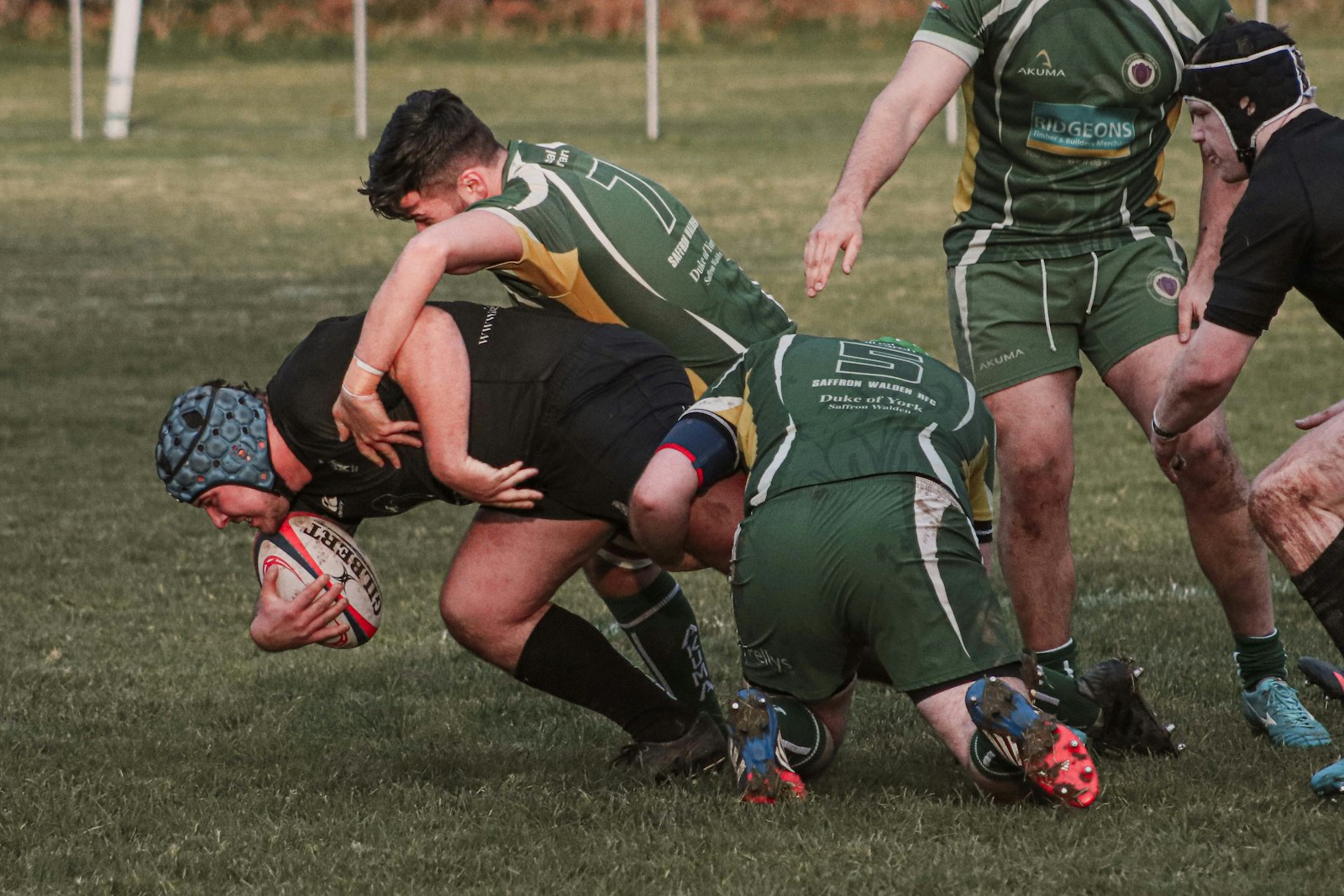
Limerick is the Irish equivalent of northern England when it comes to rugby. Garryowen FC was founded in 1884 as a Catholic, nationalist club, with matches being played on Sundays so working men did not lose a day’s wage. Shannon and Young Munster also came from a similar background. That matters because it shows rugby does not carry one fixed class identity. The institutions around it help decide who gets to belong.
Born out of exclusion: the GAA in 1884
The GAA was founded in Thurles in 1884 by men who sought to promote wider participation in Irish sport. Michael Cusack, a schoolteacher and former athlete, was frustrated by the restrictive amateur rules governing organised athletics, which made participation difficult for working men. He wanted to challenge those restrictions and revive native games, particularly hurling and Gaelic football. Nationalism and class were both part of the project. Though it did not eradicate social divisions, the GAA sought to make organised sport more accessible to ordinary people.
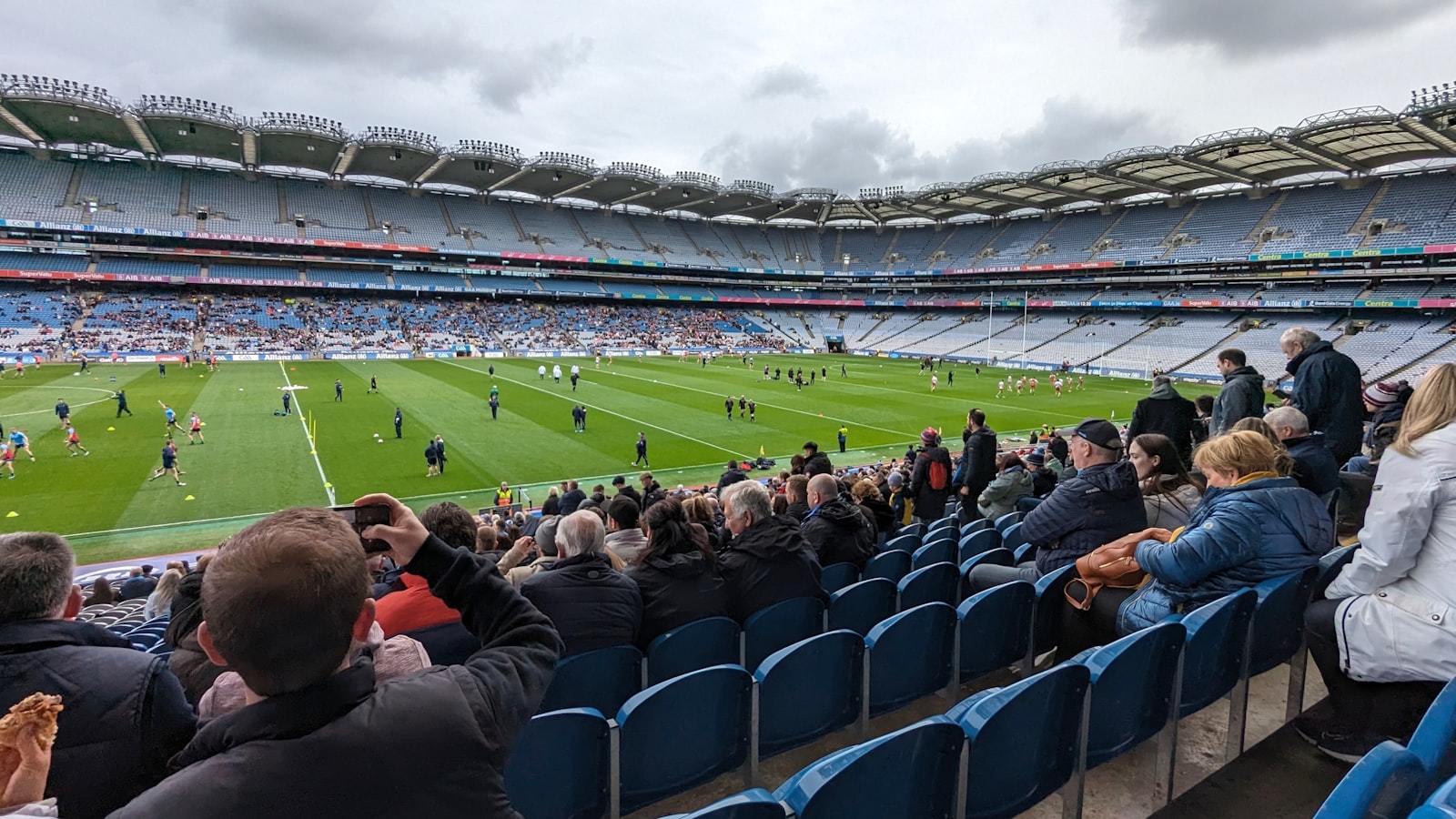
The GAA’s county structure and strong rural roots helped it develop a different sporting culture from rugby and association football. Its later restrictions on rival sports reflected the competition for loyalty and the growing importance of Irish national identity.
That history contains an awkward irony. A movement partly shaped by exclusion went on to embrace an amateur model that can still ask players to absorb costs that wealthier people are better placed to carry.
Where does football fit in?
Irish association football was much more working-class oriented. While it still retained some elements of the amateur and gentlemanly codes of the past, it provided wider playing opportunities for ordinary working men. The earliest recorded association football match in Ireland took place in Belfast in 1875, with Cliftonville becoming one of the city’s pioneering clubs. Dublin’s first clubs formed in the 1880s, and clerks, skilled workers and others helped establish the game in the capital.
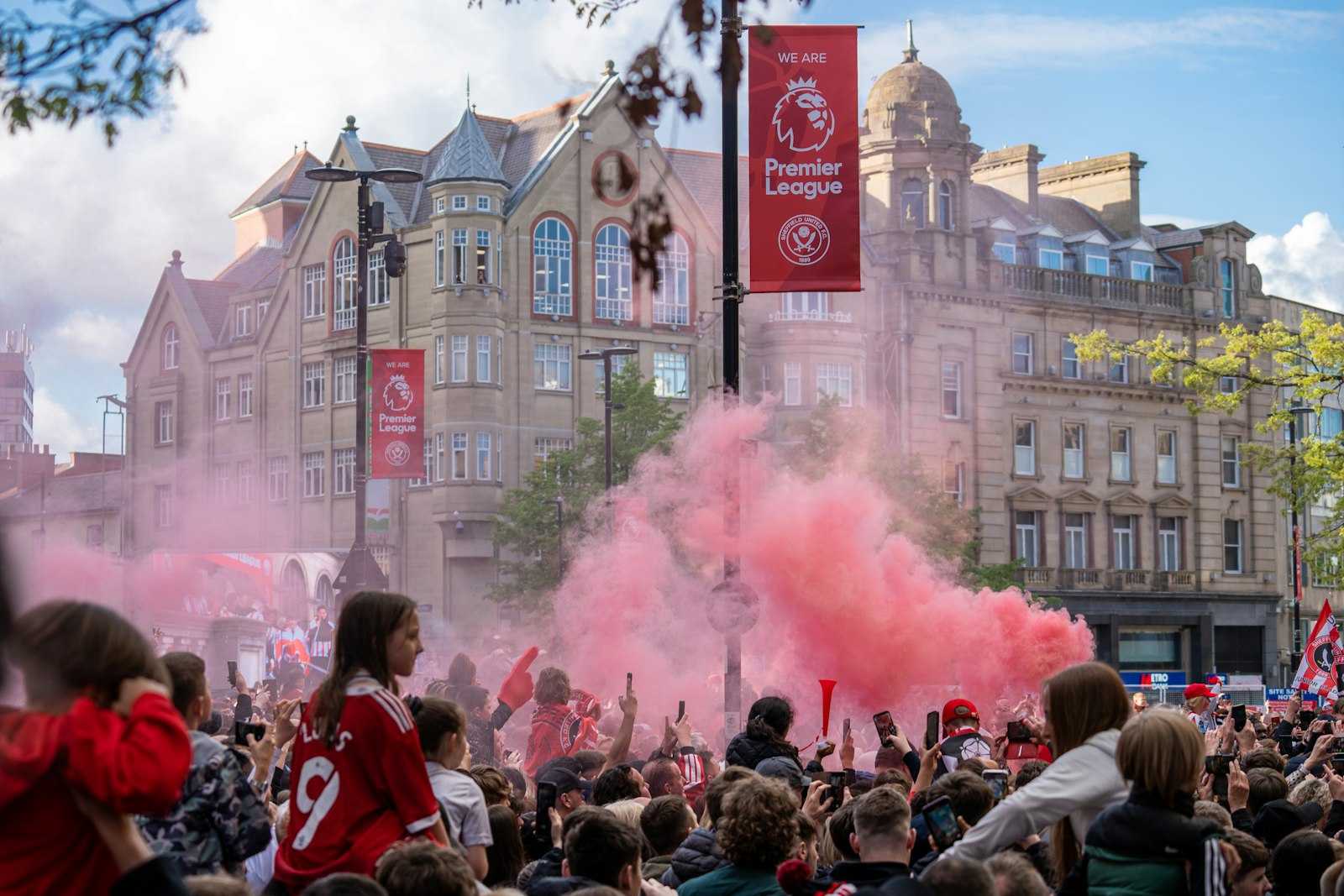
Domestic league attendance does not capture football’s wider popularity. In the Republic, Sport Ireland’s Irish Sports Monitor 2025 found that Gaelic football and soccer each had 3% weekly participation among people aged 16 and over. Football also has an audience well beyond the League of Ireland, particularly through international football and the Premier League. Irish football culture is untidy in a way attendance tables struggle to capture: someone can support a League of Ireland club locally and still spend Saturday watching Manchester United or Liverpool. Irish players have been competing in England since the very beginning; they weren’t foreign nationals then, as Ireland was part of the UK. No further comment on that, before I say something not fit for editorial. Playing a sport, attending it and following it from the sofa are three different measures.
What impact do amateur rules have on working-class players?
Gaelic games sidestepped many of the institutional barriers that shaped other sports in Ireland, largely because they were rooted in local communities. Amateur status creates a different problem: a game can be open in principle while elite participation still costs players real money and working time.
That burden is not evenly shared. Players on lower incomes can miss paid work and face additional costs for training and travel, while grants and reimbursements do not always cover the full cost of representing their county.
Indecon’s report for the GPA, published in February 2025, puts a figure on that cost. Its illustrative example for the 2023 season calculated an annual shortfall of €4,602 in additional fuel and food costs after reimbursements. This is a modelled example, not an average loss of wages. Separately, the report estimated that inter-county commitments could cost players around €3,500 a year in potential overtime earnings. The label “amateur” can sound egalitarian, but those figures show how unevenly the cost of that principle can fall.
THE COST OF PLAYING
€4,602
Source: Indecon, February 2025. This is not an average wage loss.
The GAA’s Amateur Status Review Committee was established in March 2024 and issued a membership survey in June 2025. The GAA and GPA agreed a new recognition protocol for 2026–29 on 29 November 2025, providing enhanced support for players. The ASRC published its report on 13 February 2026, proposing a certification system for inter-county teams. Congress subsequently approved the motion, designed to protect amateur status and regulate spending, with 59.1% of delegates voting in favour. Those measures acknowledge the pressure, but they do not resolve the underlying question of who can afford to sustain elite amateur participation.
Public schools built the codes, working-class towns rewrote them
Public schools played an important part in developing the modern codes of rugby and football. Rules were drawn up at Rugby School in 1845, and Cambridge began efforts to harmonise differing school rules from 1848 onwards. Other public schools such as Eton, Harrow, Winchester, Westminster and Marlborough were also heavily involved. The Football Association was founded in 1863, with the aim of standardising the rules of the game.
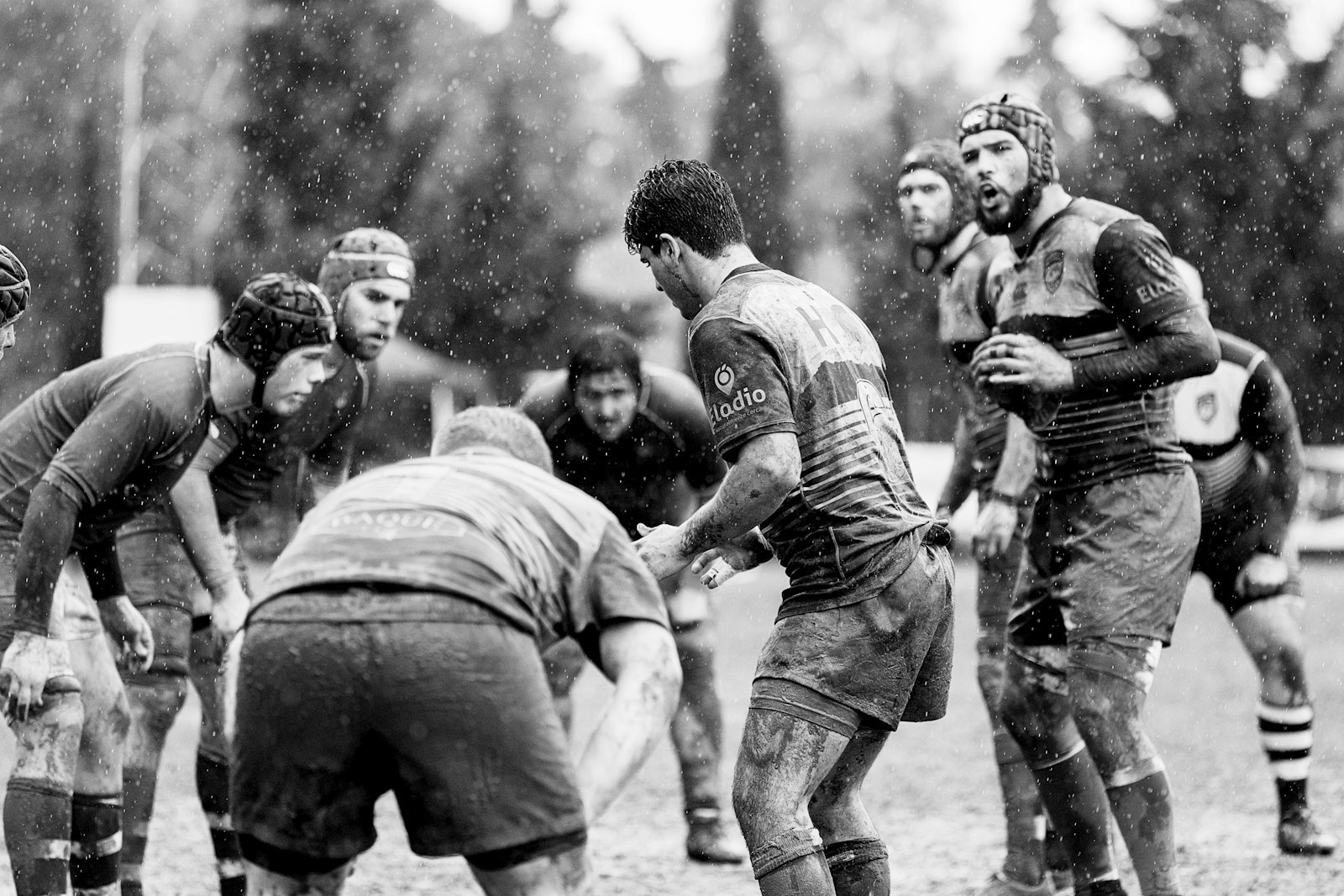
Football started to spread throughout the North and the Midlands in the 1870s. The Football Association legalised professionalism in 1885, enabling professionals to play for their clubs, instead of being unpaid for their efforts.
Huddersfield 1895: the split that created rugby league
The Rugby Football Union ruled that broken-time payments to players were illegal, with no compensation to cover lost wages. For many working-class players, this was not an abstract argument about amateur ideals. It was a question of whether they could afford to play.
On 29 August 1895, representatives of northern English clubs met at the George Hotel in Huddersfield and formed the Northern Rugby Football Union. The founding meeting involved clubs from Yorkshire and Lancashire.
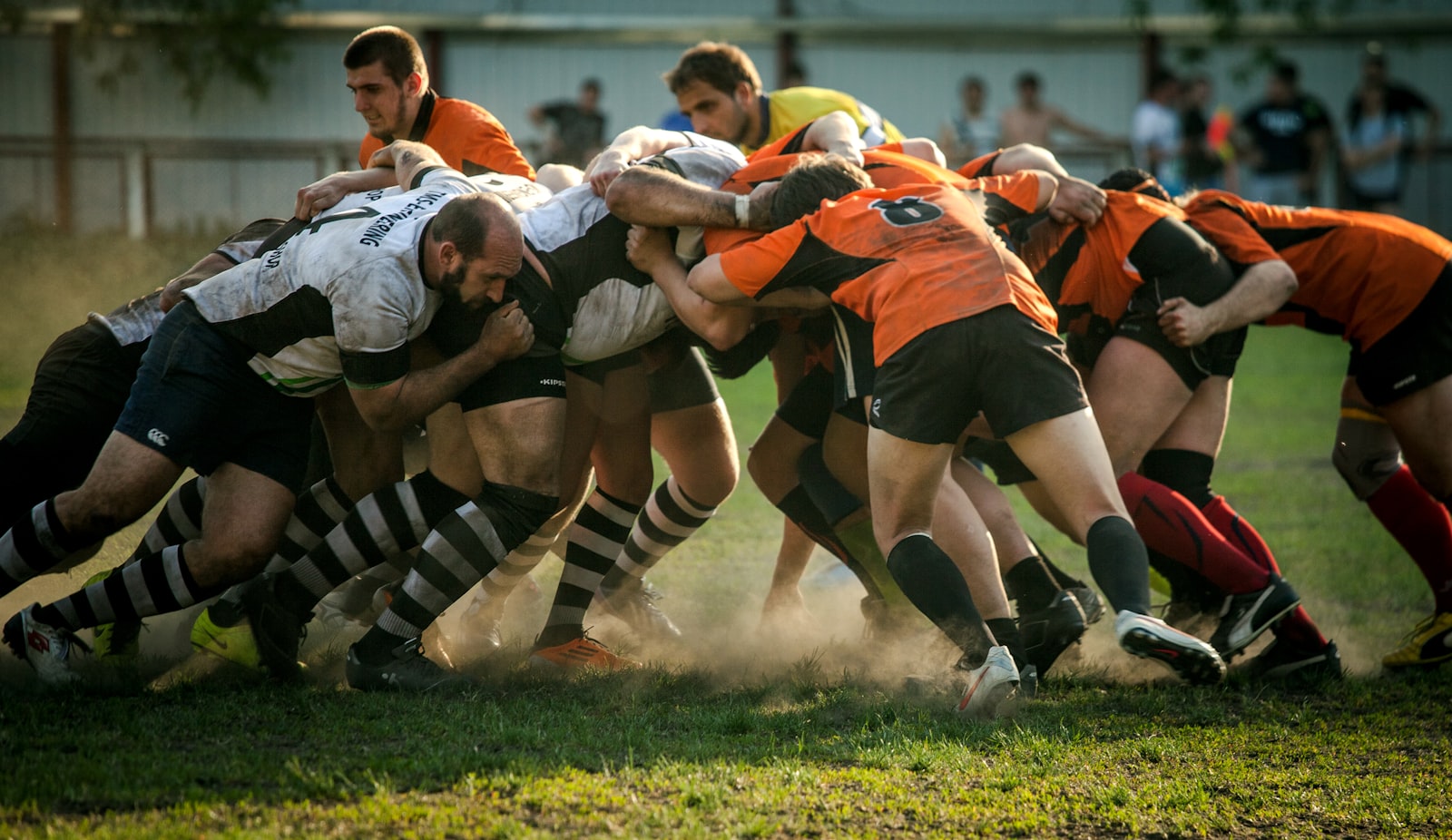
The Northern Union initially retained rugby union’s playing laws. The two codes diverged in the years that followed, including the move to thirteen-a-side in 1906.
In 1922, the Northern Union changed its name to the Rugby Football League. Rugby union retained strong middle- and upper-class associations in England, while rugby league remained deeply rooted in northern industrial communities. The Rugby Football Union barred players who had played rugby league from returning to union, a restriction that remained in place until rugby union became openly professional in 1995, a century after the split. Few moments expose the class politics of sport as clearly as a game literally splitting because working men could not afford to play it for free.
What happened to rugby in Wales and Scotland?
In Wales the development of rugby followed a similar pattern to that of England, as public schools and universities played a key role in spreading the game to the wider community. However, rugby was enthusiastically adopted in the industrial valleys by working men. The Welsh Rugby Union was formed in 1881, and Wales won its first Triple Crown in 1893, when many Welsh players were from working-class backgrounds.
Rugby in Scotland’s cities retained strong middle- and upper-class associations, while the Borders developed a locally rooted culture that crossed class lines. The textile industry also helped connect the region with Yorkshire, and clubs such as Gala became central to the sporting life of their communities.
Same game, four different class stories
Set the four countries side by side, and the differences become clearer. The striking point is that rugby does not possess an inherent class character. Institutions, local economies and the communities that took up the game gave it one. The table is a broad comparison, not a rulebook for where any individual belongs.
Swipe sideways to explore the full comparison
| Comparison | Ireland | England | Wales | Scotland |
|---|---|---|---|---|
| Rugby’s class character | Predominantly middle class, via Catholic and Protestant fee-paying schools, with a strong working-class tradition in Limerick | Strong middle- and upper-class associations, via the public-school establishment | Strong working-class tradition, adopted by miners and steelworkers | Mixed: historically genteel in cities, cross-class in the Borders |
| Working-class response | GAA founded in 1884 to promote Irish games and widen access to organised sport | Rugby split over player payments in 1895, leading to rugby league | Rugby union developed a strong working-class following; professional rugby league clubs also emerged from 1907 | Borders clubs built their own inclusive rugby union culture |
| Major sports with working-class traditions | Gaelic games, especially Gaelic football and hurling | Association football and rugby league | Rugby union and association football | Association football, with rugby union remaining strong in the Borders |
How did religion and nationalism affect Ireland?
Religion and national identity also played a part in shaping the development of Gaelic games. The GAA’s Rule 27, introduced in 1905, forbade members from playing or watching association football, rugby, cricket and hockey. It was abolished in 1971. Rule 21 was separate: it excluded members of the British security forces, including the Royal Ulster Constabulary, from GAA membership until its abolition in 2001. Neither rule amounted to a blanket ban on English people. Class influenced Britain’s sporting divides too, but religion and national identity were particularly important in parts of Scottish football.
Although rugby was seen as a Protestant sport, the situation was more complex. As the Irish middle class developed, Catholic players gravitated towards rugby, not only in public schools but also among the wider community. The GAA was also popular among Catholics. Religion may have been a divisive force, but it was not a determining factor for either sport.
Does classism still affect sport today?
The modern figures make the idea of a class-neutral meritocracy difficult to defend. BBC Sport reported in March 2026 that 26 of England’s wider 41-player Six Nations squad, or 63%, had attended independent, fee-paying schools. That compares with 6.4% of pupils in England’s school population in 2024–25. That disparity does not prove deliberate exclusion, but it is difficult to dismiss as irrelevant to who reaches the top.
Sport England’s 2024/25 survey found that 45% of children from the least affluent families met recommended activity levels, compared with 58% from the most affluent. The figures cover all physical activity, not just organised sport. Irish research shows a similar socioeconomic pattern: the ESRI’s Growing Up in Ireland study found that children from more advantaged families were more likely to participate in largely paid-for organised activities, including sport.
While many grassroots clubs operate at a purely local level, paying for subs, travel and pitch hire can be a challenge for lower-income families. Some clubs offer discounts or a pair of spare boots, but there is often a divide between wealthier and poorer areas.
Who can still afford to follow football?
Football has a different class problem: increasingly, the barrier is not getting onto the pitch but paying to stay in the stands. The commercialisation of the game has driven up the cost of following professional football. For example, Tottenham’s most expensive “1882” premium season ticket cost £2,367 for the 2025–26 season.

Football’s working-class identity has survived in songs, terraces and club mythology, but access to the live game is less secure. A sport can remain culturally working class while becoming steadily more expensive for working-class supporters to attend. That contradiction is becoming harder to ignore.
Sport still gives people chances that few other parts of life can, but it has never been a pure meritocracy. The obstacle that once looked like lost wages in Huddersfield can now look like fee-paying school pathways, unpaid inter-county commitments, travel costs or a £2,000-plus season ticket. The class barrier did not disappear. It got better at disguising itself.

Editor. Gig-goer. Fantasy football tactician. London-based Executive Assistant by day, live music obsessive by night. Being a control freak? Very transferable skill.