
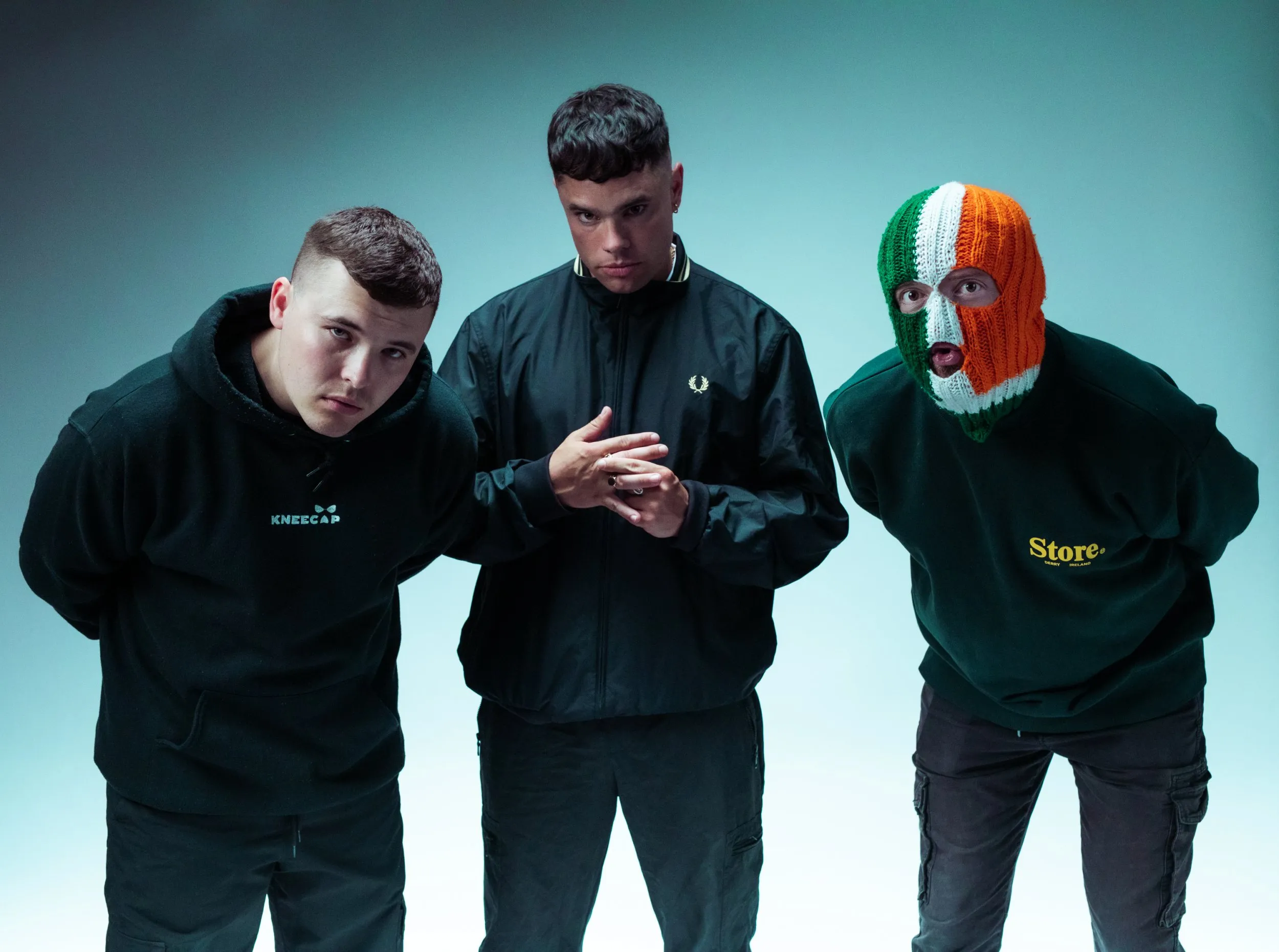
“This is a festival, not a court date,” joked Móglaí Bap halfway through Kneecap’s headlining set at Wide Awake 2025. The crowd laughed, then roared, then moshed. Welcome to Wide Awake Festival—the south London weekender that’s less about flower crowns and more about unapologetic politics, big basslines, and community in resistance.
This year, with legal battles hanging over both the festival’s location and its headliners, it felt like the gig had something to prove. Lambeth Council’s permitting issues, public scrutiny over park usage, and a High Court ruling hovered in the build-up. Add Mo Chara’s fresh terrorism charge, and you’ve got the preamble most festivals don’t dare touch.
But that’s the thing about Wide Awake—it never wanted to be safe.
A Patchwork of Provocation and Euphoria
The day began gently enough. Yuuf, hidden away in The Shacklewell Arms tent, ushered early arrivals into the day with ambient warmth and modular hums, a reminder that sometimes revolution starts quietly. But the tranquillity didn’t last.
Donny Benet, dressed like a time-travelled disco uncle, got hips moving with “Mr Experience,” the day’s first true spark of communal joy. Then came Warmduscher, who delivered their usual mutant funk chaos like the house band in a dystopian speakeasy—wild, charismatic, impossible to pin down.
Over at the Bad Vibes stage, Peaches transformed the tent into a neon-lit pressure cooker. Her declaration of solidarity with Palestine—“it is a genocide. Free Palestine.”—landed with both weight and wild cheers. “Fuck the Pain Away” became a kind of radical catharsis, more protest than party.
Meanwhile, English Teacher proved once again why they’re the most cerebral punk band in Britain right now. “Song About Love” rolled out like a carefully folded letter, and Lily Fontaine’s voice cut through the haze with surgical clarity. Their measured political tone—more quiet indictment than megaphone slogan—was just as powerful.
Getdown Services were crammed into a Grove DIY stage that now seems far too small for them. They made it work. Barely. The crowd spilt out in every direction, arms up, knees high, shouting every lyric like it was gospel. Give them a bigger stage next year—or risk a riot.
A Headliner Like No Other
And then came Kneecap.
The tension was kinetic—not aggressive, just tightly coiled. You could feel it in the silence between sets, in the surge toward the main stage, in the flags (Palestinian, Irish, the occasional anti-fascist red-and-black) being hoisted from shoulders and scaffold poles alike.
The trio opened with “3CAG,” and the energy detonated. There was no build-up. No easing in. Just a wall of bass, a snarling beat, and Mo Chara yelling into the wind: “They tried to stop this.” They weren’t wrong. There were reportedly multiple attempts—from councillors, police, lobbyists—to pull the plug. None succeeded.
“The Recap,” aimed directly at the right-wing media and Kemi Badenoch (now, somehow, leader of the Tory party), landed like a punchline delivered with brass knuckles. “Fenian Cunts” was shouted back at the band with such ferocity it felt like half the park might lift off the ground.
Then came a curveball: Jelani Blackman stepping out for “Harrow Road.” Brixton met Belfast on a slow-burn beat, and for a moment the chaos paused, reconfigured itself into something smooth, proud, and deeply local.
Not Just a Performance — A Point
More than once, Kneecap stepped back from the music to speak plainly. “We are not the story,” said Mo Chara. “We’re the warning shot. If they come for us, they’ll come for you too. And we won’t be the last to fight back.”
And yet, for all the fury, the set was never joyless. There were mosh pits. There were chants in Irish and English. People were laughing, hugging, crying, jumping—sometimes all at once. When Próvaí leapt into the crowd during “C.E.A.R.T.A.”, it felt less like a finale and more like an exorcism.
This was a moment of collective clarity—messy, loud, righteous.
The Verdict
Wide Awake 2025 didn’t just survive the storm. It became it.
Kneecap’s set was a defiant middle finger to the establishment, sure. But it was also a love letter—to language, to rebellion, to a culture that refuses to be silenced. They didn’t just play a festival. They turned it into a statement.
And if this is how the UK festival season starts, one can only imagine where it goes from here.